Superbill example
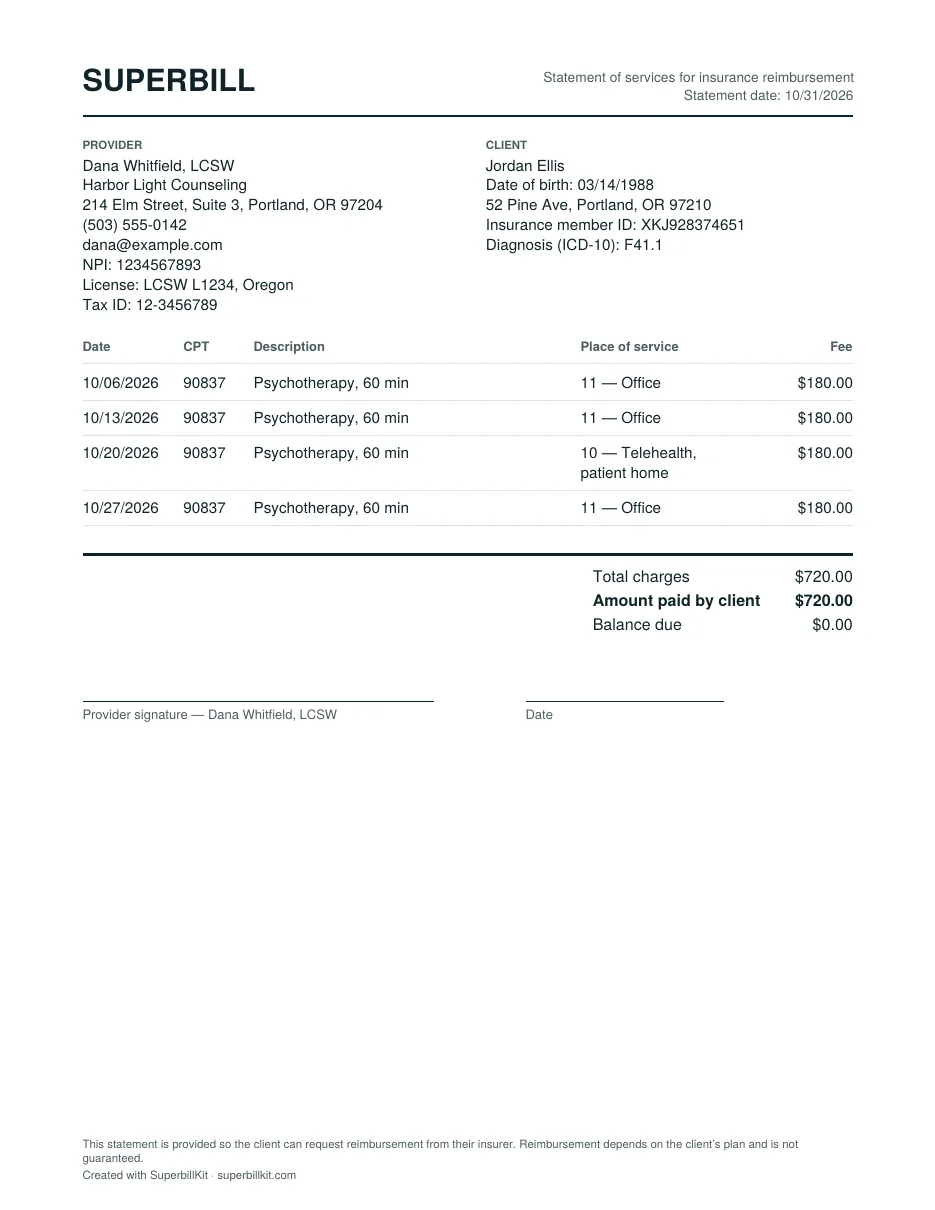
This is what a complete superbill looks like: one month of therapy sessions for one client, ready to submit to insurance.
The example, section by section
- Header and statement date. Says what the document is and when it was issued. Insurers use the date to check submission deadlines.
- Provider. Name with credentials (LCSW), practice name, address, phone, NPI, license and tax ID. A missing NPI or tax ID is one of the most common reasons a claim is sent back.
- Client. Name, date of birth, address and insurance member ID, so the plan can match the claim to the member.
- Diagnosis. One ICD-10 code (here F41.1, generalized anxiety disorder) that applies to all sessions on the statement.
- Services. Each session on its own line: date, CPT code 90837 (60-minute psychotherapy), description, place of service (11 for office, 10 for telehealth at home) and fee.
- Totals. Total charges, what the client paid and the balance. Plans reimburse based on what was actually paid.
- Signature and date. Some plans reject unsigned superbills.
Make your own in two minutes. Fill in the same fields and download a PDF. Nothing is uploaded.
Create a superbillWhat a Good Faith Estimate looks like
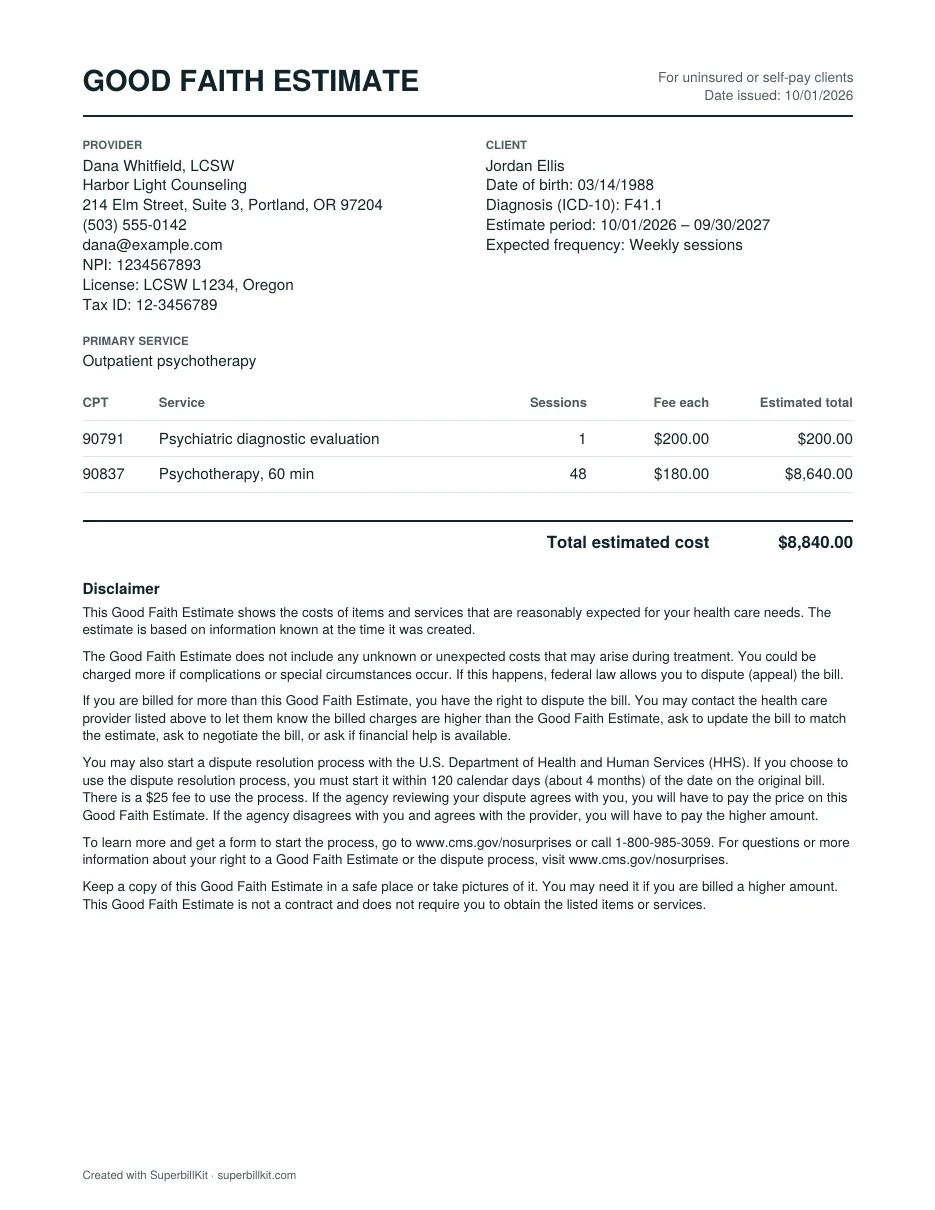
For self-pay clients you may also need a Good Faith Estimate before treatment starts. Here is an example covering a year of weekly sessions.
Questions
Is there one official superbill form?
No. Unlike the CMS-1500 claim form, a superbill has no single official layout. Insurers care that the required information is there, not how it is arranged.
Should a superbill show sessions the client hasn't paid for?
It can list them, but the paid amount should reflect only what the client actually paid. Plans reimburse paid charges.
Can a client use this example to make their own superbill?
No. A superbill must come from the provider who delivered the service. Clients should ask their therapist for one.